Delivery drone technology is transforming global logistics with speed and efficiency. These unmanned aerial vehicles deliver packages, food, and even medical supplies to doorsteps. A drone cuts delivery time from hours to minutes, solving last-mile challenges. This guide explains how Delivery drone works, its uses, and why it’s reshaping modern delivery.
How Does a Delivery Drone Operate? Core Mechanics
A Delivery drone relies on advanced technology to navigate and deliver safely. It uses GPS for precise positioning, avoiding obstacles with cameras and sensors. Most models have multiple rotors for stability, even in mild wind conditions. The drone carries packages in secure compartments, releasing them gently at the target location.
Battery life and payload capacity define a drone’s performance. Typical models carry 1-5kg payloads and fly 10-30km per charge. Advanced flight controllers manage speed and altitude, ensuring smooth, on-time deliveries. Many drone can return to base autonomously after completing tasks.
Key Technologies for Power
GPS and AI work together to guide Delivery drone through complex routes. AI algorithms analyze real-time data to avoid buildings, trees, and other drones. Some models use 5G connectivity for instant communication with ground control. This tech ensures drone adapt to changing weather or traffic conditions.
Sensors are critical for safety: ultrasonic sensors detect nearby objects, while thermal cameras spot humans. Parachute systems deploy in emergencies, protecting packages and people below. These features make drone a reliable option for urban and rural deliveries.
Common Uses of Delivery Drone Across Industries
Food delivery is the most popular use case for Delivery. Restaurants and food apps use them to deliver meals hot and fresh. In busy cities, a drone skips traffic jams, cutting delivery time to 15 minutes or less. This service is especially popular for lunch rushes and late-night orders.
Medical supply delivery highlights a drone’s life-saving potential. Remote clinics receive vaccines, blood, and medications quickly via drone. In disaster zones, Delivery drone access hard-to-reach areas, delivering aid where roads are blocked. This speed can mean the difference between life and death for patients.
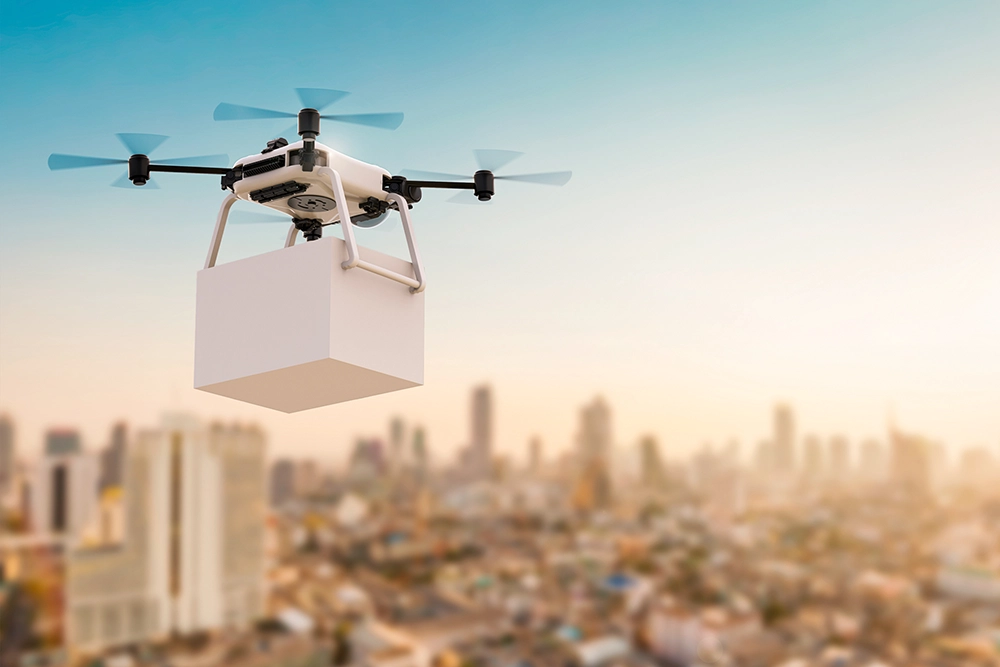
A modern Delivery drone hovers above a residential street, preparing to drop off a package safely.
Logistics and Retail: Delivery Drone for E-Commerce
Online retailers use drone to fulfill small-parcel orders faster. Companies like Amazon test drone delivery for items under 2kg, promising same-day delivery. Rural customers benefit most, as a Delivery drone bridges gaps in traditional postal services. This expands access to products previously unavailable in remote areas.
Grocer delivery is a growing niche for drone. Lightweight items like snacks, drinks, and fresh produce are transported safely. Some models have temperature-controlled compartments to keep food fresh. This service saves shoppers time and reduces the need for car trips.
Challenges and Future of Delivery Drone
Regulatory hurdles remain a key challenge for widespread drone use. Many countries require permits for commercial drone flights. Rules around flight altitude, no-fly zones, and pilot certification vary globally. As technology improves, regulators are updating laws to support safe Delivery drone operations.
Weather and payload limits also pose challenges. Strong winds, rain, or snow can ground a Delivery drone. Heavy packages require larger drones with more powerful motors. Future models will address these issues with better weather resistance and higher payload capacity.
The future of Delivery drone includes autonomous swarms and longer flight times. Swarms of drones will coordinate to deliver multiple packages in one trip. Advances in battery tech will extend flight ranges to 50km or more. This will make drone a mainstream option for all types of deliveries.
Powering Reliable Delivery Drone: Battewill Batteries
Every high-performing Delivery drone needs a stable, long-lasting battery—and Battewill delivers. As a leader in daily-use batteries, Battewill designs specialized solutions for drone demands. Its lithium-ion batteries support 30km flight ranges, powering food and medical deliveries. Battewill’s batteries feature 45-minute fast charging, getting drones back in the air quickly. They withstand extreme temperatures (-20°C to 60°C) and resist vibration during flight. Built-in protections prevent overcharging and short circuits, ensuring safety. Whether powering a small food delivery drone or a heavy-lift logistics model, Battewill provides the energy that keeps drone flying reliably.