E-bicycle battery is the core of your electric bike, dictating range, safety, and lifespan. Many riders struggle with “how to choose a good E-bicycle battery” amid countless options. A quality E-bicycle battery balances capacity, durability, and safety for daily commutes or long rides. This guide breaks down key factors to help you pick the perfect one.
First: Understand E-Bicycle Battery Types (Critical for Choice)
Not all E-bike battery options are equal—chemistry defines performance. Lithium-ion (Li-ion) is the most popular E-bike battery type for 2026. It offers high energy density, lightweight design, and 500-1000 charge cycles.
Lithium-iron phosphate (LiFePO4) E-bike battery stands out for safety. It resists overheating and deep discharges, ideal for frequent riders. This type lasts 1500+ cycles but weighs slightly more than standard Li-ion.
Lead-acid E-bike battery is cheaper but outdated. It’s heavy, has short lifespan (300 cycles), and requires regular maintenance. Avoid it unless on an extremely tight budget.
Nickel-cadmium (NiCd) E-bike battery is rare now. It suffers from memory effect and lower energy density. Modern riders prioritize Li-ion or LiFePO4 for better value.
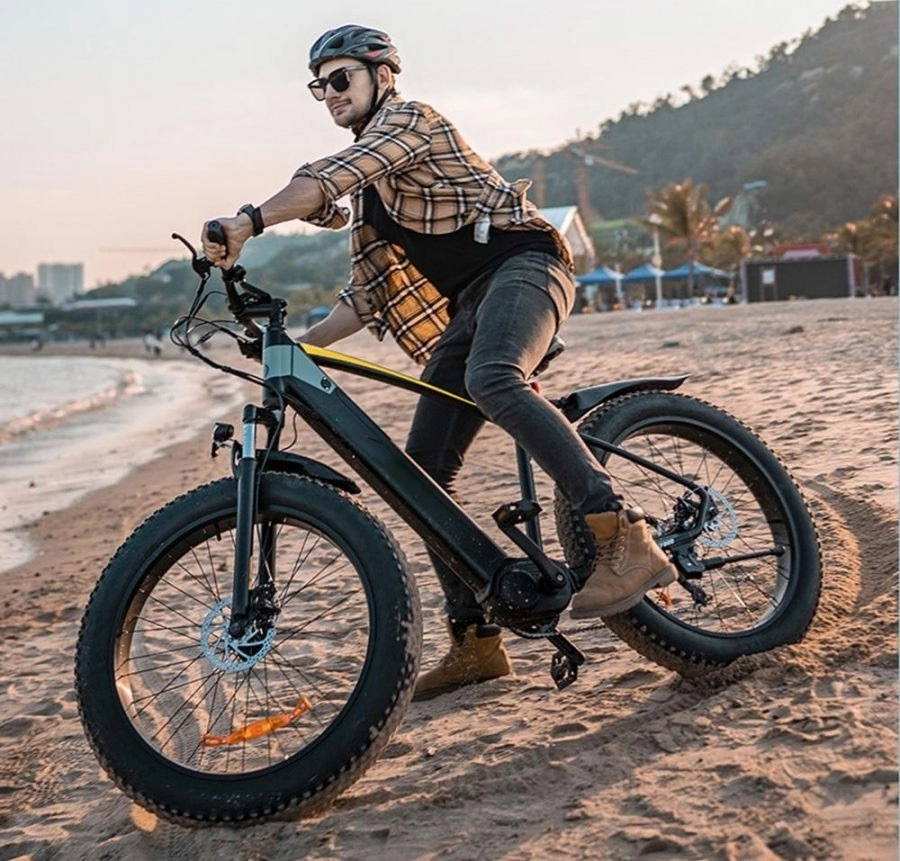
A visual guide to E-bike battery types (Li-ion, LiFePO4, lead-acid) and key specs to check before buying.
Key Specs to Check: How to Judge E-Bicycle Battery Quality
Capacity (Ah) determines your E-bike battery’s range. Aim for 10-15Ah for daily commutes (40-60km range). Long-distance riders need 15-20Ah to avoid mid-ride recharges.
Voltage (V) must match your electric bike’s motor. Most E-bike battery options come in 36V, 48V, or 60V. Using the wrong voltage damages the motor and battery.
Energy density (Wh/kg) affects weight and runtime. A high-quality E-bike battery has 150-200Wh/kg. This means more range without extra bulk on your bike.
Discharge rate (C-rating) matters for hill climbs. Choose an E-bike battery with 1-2C rating for smooth acceleration. Higher C-ratings handle steep terrain better.
Safety Features: Non-Negotiables for E-Bicycle Battery
Overcharge protection is a must for any E-bike battery. It prevents voltage spikes that cause overheating or fires. Look for BMS (Battery Management System) integration.
Short-circuit and over-discharge protection add layers of safety. These features extend E-bikebattery life and prevent accidents. Never buy a battery without them.
Waterproof rating (IP65+) is critical for outdoor use. A weather-resistant E-bike battery handles rain, dust, and mud. This ensures reliability in all riding conditions.
Certifications like UL, CE, or UN38.3 validate E-bikebattery quality. These standards guarantee the battery meets global safety and performance benchmarks.
Practical Factors to Consider for E-Bicycle Battery
Charging time influences daily usability. A good E-bike battery charges to 80% in 2-4 hours. Fast-charging options (1-2 hours) suit busy commuters.
Weight impacts bike handling and portability. Li-ion E-bike battery weighs 2-5kg, while LiFePO4 is 3-6kg. Choose a weight that feels balanced on your bike.
Warranty reflects brand confidence in E-bike battery. Aim for 2-3 years of warranty coverage. This includes free replacements for manufacturing defects.
Compatibility with your bike’s design is essential. Ensure the E-bicycle battery fits your bike’s frame or rack. Measure dimensions before purchasing to avoid mismatches.
Common Mistakes to Avoid When Choosing E-Bicycle Battery
Don’t prioritize price over quality—cheap E-bike battery risks safety. Low-cost options skip safety features and use inferior cells. They fail quickly and may cause hazards.
Avoid ignoring your riding habits. A 10Ah E-bike battery works for short commutes but not long rides. Match capacity to how far you ride daily.
Don’t overlook maintenance needs. Li-ion E-bicycle battery requires minimal care, but lead-acid needs regular topping up. Choose a type that fits your lifestyle.
Never buy unbranded E-bicycle battery. Unknown brands lack quality control and safety testing. Stick to reputable manufacturers for peace of mind.
Battewill: Your Trusted E-Bicycle Battery Provider
Battewill offers high-quality E-bicycle battery solutions tailored to 2026 riders. Its Li-ion and LiFePO4 E-bicycle battery lineup delivers 10-20Ah capacity and 36V/48V/60V options. Each E-bicycle battery features BMS protection, IP67 waterproofing, and 1500+ charge cycles for long-lasting use. Battewill’s batteries charge to 80% in 2.5 hours and balance lightweight design with powerful performance. Whether for daily commutes or weekend adventures, Battewill’s E-bicycle battery ensures safe, reliable rides every time.