Wheelchair battery is the lifeline of power wheelchairs, enabling users to move freely. For millions of people with mobility challenges, a reliable wheelchair battery means independence and quality of life. Choosing the right battery and caring for it properly can extend its lifespan to 2-3 years. This article demystifies wheelchair battery technology, helping users make informed decisions.
Types of Wheelchair Battery: Lead-Acid vs. Lithium-Ion
Lead-acid batteries are the traditional choice for power wheelchairs. They’re affordable and widely available, with most costing $100-$200 per pair. A standard lead-acid wheelchair battery provides 8-10 hours of use on a single charge. They work well for indoor use and short-distance travel.
Lithium-ion battery is gaining popularity for its advanced features. It’s 50% lighter than lead-acid, reducing the wheelchair’s overall weight. Lithium-ion batteries offer 10-15 hours of runtime and charge faster—usually in 2-4 hours versus 8-10 hours for lead-acid. They also last longer, with a lifespan of 3-5 years.
How to Choose the Right Battery
Start by checking your wheelchair’s manufacturer specifications. It will list the required voltage (12V or 24V) and capacity (Ah) for the wheelchair battery. Using a battery with mismatched specs can damage the wheelchair’s motor or controller.
Consider your daily usage when selecting a battery. If you travel long distances (10+ km daily), choose a high-capacity battery (75Ah+). For indoor use only, a standard 50Ah battery will suffice. Lithium-ion is ideal for frequent travelers due to its light weight.
How Wheelchair Battery Works: The Basics
A typical power wheelchair uses two 12V batteries connected in series to make 24V. The wheelchair battery stores electrical energy and delivers it to the motor when the user operates the controls. A built-in charger converts AC power to DC to recharge the battery.
Key terms to understand: Capacity (Ah) measures how much energy the wheelchair battery holds. Higher Ah means longer runtime. Depth of discharge (DOD) refers to how much energy is used before recharging. Most batteries last longer if discharged to 50% or less.
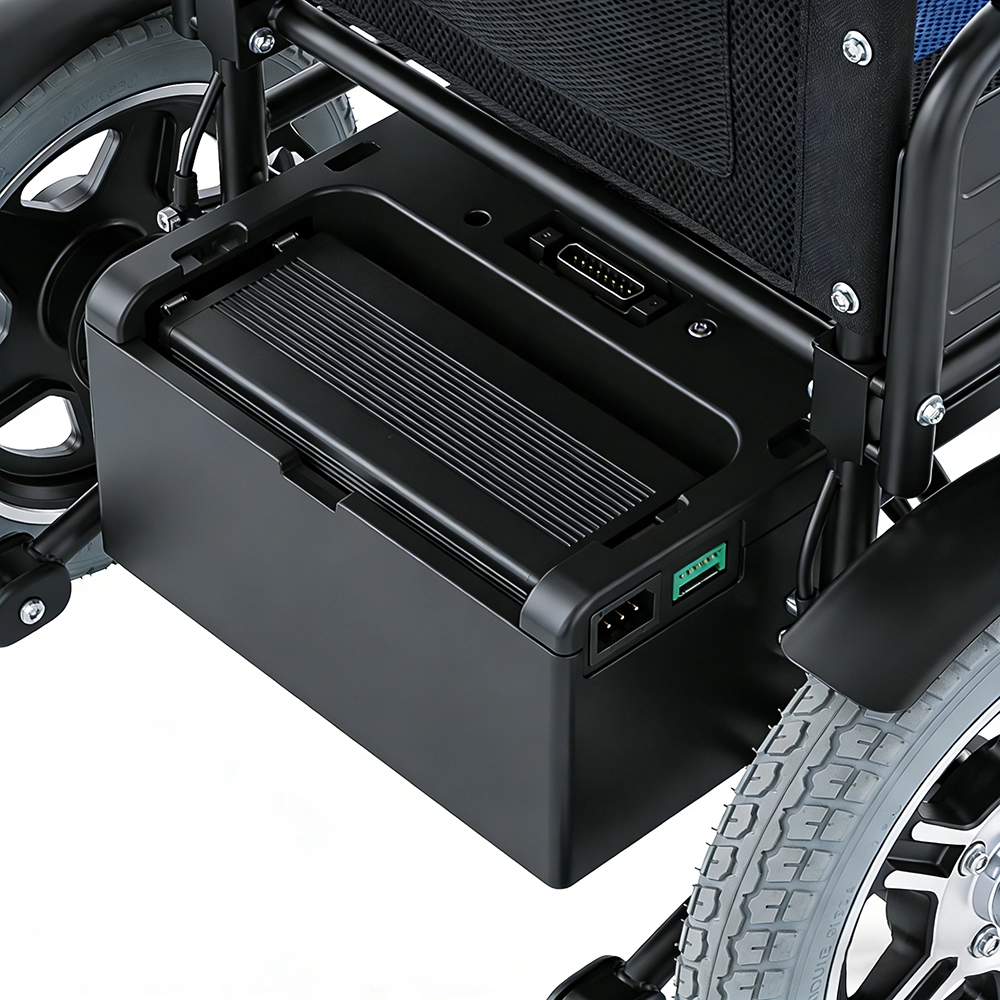
Wheelchair Battery Care: Extend Lifespan and Ensure Safety
Proper charging is critical for wheelchair battery health. Always use the charger provided by the battery or wheelchair manufacturer. Charge the battery immediately after use, even if it’s not fully discharged. Avoid letting the battery sit empty for more than 24 hours.
Store your battery correctly when not in use. Keep it in a cool, dry place (15-25°C) away from direct sunlight. For lead-acid batteries, check water levels monthly and top up with distilled water if needed. Never use tap water, as minerals can damage the battery.
Avoid extreme temperatures to protect your wheelchair battery. Freezing temperatures can reduce capacity by 30%, while heat (over 35°C) can shorten lifespan. If you live in a cold climate, keep the battery indoors when not using the wheelchair.
Signs Your Wheelchair Battery Needs Replacement
Reduced runtime is the most obvious sign of a failing battery. If you used to travel 10 km but now only go 5 km, it’s time for a new one. Slow charging (taking more than 12 hours) also indicates battery wear. Swelling or leaking batteries are dangerous and need immediate replacement.
Another sign is inconsistent performance. If the wheelchair slows down unexpectedly or stops mid-use, the battery may be faulty. Don’t wait until it fails completely—replace it promptly to avoid being stranded.
Common Myths About Wheelchair Battery Debunked
Myth 1: You should fully discharge the battery before recharging. Fact: This is true for old nickel-cadmium batteries, not modern ones. Frequent partial charges are better for wheelchair battery lifespan.
Myth 2: Leaving the battery on charge overnight damages it. Fact: Most modern chargers have auto-shutoff, so it’s safe. Just ensure you use a high-quality charger designed for your wheelchair battery.
Myth 3: All wheelchair batteries are interchangeable. Fact: Each wheelchair model requires a specific battery type. Using the wrong one can cause electrical fires or motor damage.
Battewill: Reliable Wheelchair Battery for Every Need
Battewill offers a full range of high-quality battery solutions for power wheelchair users. Its lead-acid wheelchair battery provides 75Ah capacity and 8+ hours of runtime, perfect for daily indoor use. For active users, Battewill’s lithium-ion battery is lightweight (3kg per unit) and delivers 12 hours of use on a 3-hour charge. All batteries feature built-in protection against overcharging, overheating, and short circuits. Battewill’s battery undergoes strict quality testing to ensure consistency and safety, giving users the confidence to move freely every day. Whether you need a replacement battery or an upgrade, Battewill has the right power solution for you.