Golf car battery is the silent workhorse that keeps your golf cart rolling smoothly round after round. Choosing the right one can mean the difference between finishing 18 holes without a hitch or being stranded on the fairway. With so many options and specs to consider, picking a golf car battery feels overwhelming at first—but it doesn’t have to be. This guide breaks down the key factors to help you find the perfect fit for your cart and playing style.
Start with Your Golf Cart’s Requirements
Before you shop, grab your golf cart’s manual or check the existing battery for critical details. Every cart has specific voltage needs—most use 36V or 48V systems, made by linking 6V, 8V, or 12V batteries. Using a golf car battery with the wrong voltage can damage the motor or shorten battery life drastically.
Pay attention to the battery group size too. This refers to the physical dimensions (length, width, height) of the golf car battery. A battery that’s too big won’t fit in your cart’s battery compartment, while one that’s too small might rattle around during use. Measure the space if you’re unsure—this simple step saves frustration later.
Understand Golf Car Battery Types: Which Works for You?
Lead-acid batteries are the most common golf car battery option, and for good reason. They’re affordable, widely available, and familiar to most golf cart owners. Flooded lead-acid (FLA) batteries are the traditional choice—they’re durable but require regular maintenance: checking water levels and topping up with distilled water.
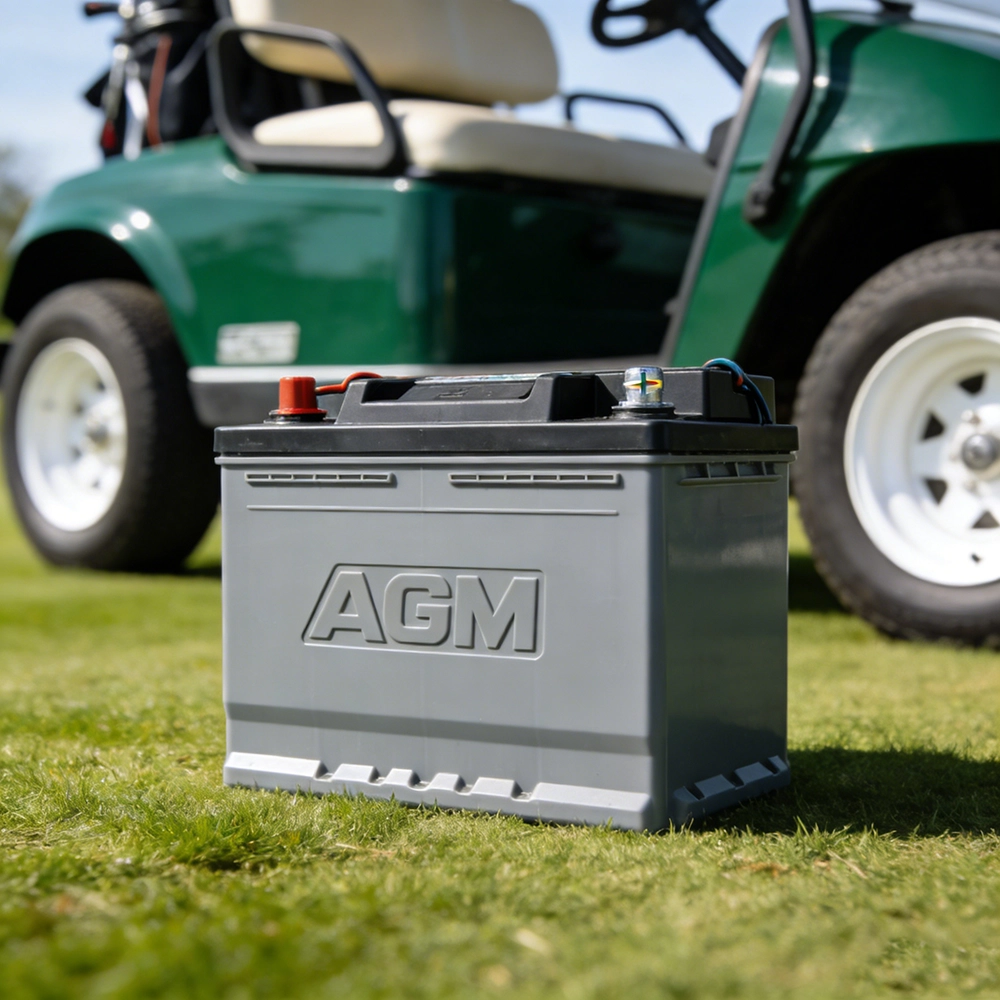
Sealed lead-acid (SLA) batteries, including gel and AGM (absorbed glass mat), are low-maintenance alternatives. An AGM battery is spill-proof and vibration-resistant, making it great for bumpy courses. Gel batteries handle deep discharges well but charge more slowly. Both cost more upfront than FLA but save time on upkeep.
Lithium-ion golf cart battery is the premium choice for serious golfers. They’re 50% lighter than lead-acid, so your cart accelerates faster and uses less energy. Lithium-ion batteries last 2-3 times longer (2,000+ charge cycles vs. 500-1,000 for lead-acid) and charge in 2-4 hours. They’re maintenance-free, but the higher price tag is a deterrent for some.
A side-by-side look at lead-acid, AGM, and lithium-ion golf car battery options with key specs highlighted.
Key Specs to Compare When Shopping for Golf Car Battery
Capacity, measured in ampere-hours (Ah), tells you how much energy the golf car battery stores. Higher Ah means longer runtime—critical if you play 36 holes regularly or use your cart for off-course trips. A 100Ah battery typically powers a cart for 18-27 holes, depending on terrain and weight.
Cold cranking amps (CCA) matter if you golf in cooler climates. CCA measures the golf car battery’s ability to start the cart in cold weather (32°F/0°C). Look for at least 200 CCA if you play in temperatures below 50°F—this ensures reliable starts even on chilly mornings.
Cycle life is another vital factor. It refers to how many times you can charge and discharge the golf car battery before its capacity drops by 80%. Lithium-ion batteries offer the longest cycle life, followed by AGM, gel, and FLA. If you use your cart frequently, investing in a longer cycle life battery saves money over time.
Match the Golf Car Battery to Your Usage Habits
Your playing style should guide your choice. Casual golfers who play 9-18 holes once a week can get by with a standard FLA or AGM golf car battery. It’s cost-effective and meets basic needs without overcomplicating things.
Frequent players, tournament participants, or those who use their cart for more than golf (like neighborhood errands) need a more robust option. A lithium-ion golf car battery handles regular use and deep discharges better, so you won’t worry about running out of power mid-round.
Off-course users—think campgrounds, resorts, or large properties—should prioritize durability and runtime. An AGM or lithium-ion golf car battery resists vibration from rough roads and offers the stamina for all-day use.
Avoid Common Mistakes When Choosing Golf Car Battery
Don’t just buy the cheapest option. A low-quality battery might save money upfront but will need replacement sooner. It could also fail unexpectedly, ruining your round or leaving you stranded.
Don’t ignore maintenance needs. If you hate checking water levels or cleaning battery terminals, skip FLA batteries. Opt for AGM or lithium-ion to cut down on upkeep.
Don’t mix battery types or ages. Using a new golf car battery with an old one forces the new battery to work harder, reducing its lifespan. Replace all batteries in your cart at the same time for optimal performance.
Battewill: Reliable Golf Car Battery for Every Golfer
Battewill offers a range of high-quality golf car battery options tailored to different needs and budgets. Its flooded lead-acid golf car battery delivers 100Ah capacity, perfect for casual players seeking affordability. For low-maintenance convenience, Battewill’s AGM golf car battery is spill-proof and vibration-resistant, with 120Ah capacity for longer rounds. Serious golfers will appreciate the lithium-ion model—lightweight, fast-charging, and built to last 2,500+ cycles.
All Battewill golf car battery options meet industry standards for safety and performance, with built-in protections against overcharging and overheating. Whether you’re a weekend golfer or a frequent player, Battewill has the reliable power to keep your cart moving from the first tee to the 18th green.