Rescue drone has redefined how emergency teams tackle life-threatening situations. It reaches remote or dangerous areas in minutes, cutting search times and saving precious lives. A well-equipped rescue drone combines speed, advanced sensors, and reliable power to support critical missions. From mountain rescues to flood relief, it has become an irreplaceable asset for first responders worldwide.
Core Capabilities That Make Rescue Drone a Lifesaver
Speed is the biggest advantage of a rescue drone. It flies at 50-80 km/h, covering 10+ square kilometers per hour. This lets teams search large areas far faster than ground patrols.
Thermal imaging is a non-negotiable feature for rescue drone. It detects body heat even in darkness, dense forests, or smoky environments. Survivors hidden under foliage or rubble become visible instantly.
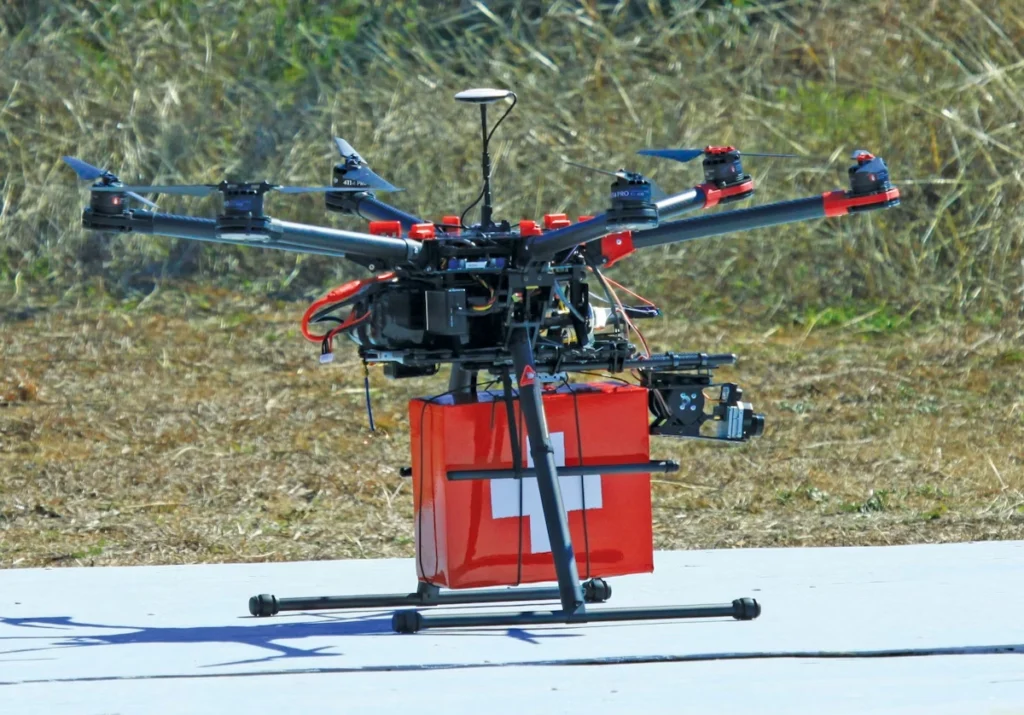
Payload flexibility expands a rescue drone’s utility. Many carry first-aid kits, water, or emergency blankets. Others have loudspeakers to guide lost individuals to safety or warn of incoming dangers.
Rugged build quality ensures rescue UAV perform in harsh conditions. They withstand rain, strong winds, and extreme temperatures. This reliability matters most during hurricanes, wildfires, and blizzards.
Rescue Drone in Action: Real-World Emergency Scenarios
Mountain rescue teams rely heavily on rescue UAV . It navigates steep, icy terrain that risks human lives. Thermal cameras spot climbers trapped by avalanches or lost in fog within minutes.
In wildfire situations, rescue UAV maps fire spread in real time. It identifies trapped survivors and relays their locations to command centers. This helps teams plan safe evacuation routes and deploy resources effectively.
Urban search and rescue uses rescue UAV after earthquakes or building collapses. It enters unstable structures to check for survivors. Its small size lets it navigate tight spaces without endangering rescuers.
Coastal and water rescues benefit from waterproof UAV drone models. They spot drowning victims in rough seas and drop flotation devices. Some can even tow small rafts to safety zones.
Key Features to Look for in a Reliable Rescue Drone
Long flight time is critical for rescue UAV. Missions often last hours, so 40+ minutes of runtime per charge is ideal. Swappable batteries help extend operations without downtime.
Obstacle avoidance technology prevents rescue UAV crashes. Sensors detect trees, rocks, and buildings, ensuring safe flight in complex environments. This protects the drone and keeps missions on track.
Real-time data transmission lets rescue drone share footage instantly. Teams on the ground receive live video and thermal images. This enables quick decision-making during fast-paced emergencies.
Portability matters for rescue UAV deployed to remote areas. Foldable designs fit into backpacks, making them easy to carry by foot or vehicle. Quick setup means teams can launch missions within minutes.
How Rescue Drone Enhances Team Coordination & Safety
Rescue drone reduces risks for human rescuers. It enters dangerous zones first, like burning buildings or floodwaters. This minimizes the chance of injury or death for emergency personnel.
It improves coordination between multiple teams. Live footage from the rescue UAV is shared across all units. Firefighters, paramedics, and police can align their efforts seamlessly.
In large-scale disasters, rescue UAV acts as a “sky eye” for command centers. It provides a bird’s-eye view of the entire disaster area. This helps leaders allocate resources where they’re needed most.
Overcoming Challenges: Making Rescue Drone More Effective
Weather limitations can hinder rescue drone operations. Strong winds or heavy rain may ground some models. Advanced designs with weather resistance are solving this issue gradually.
Regulatory rules require proper training for rescue drone operators. Many regions mandate certifications to ensure safe and legal flight. Emergency teams invest in regular training to stay compliant.
Battery life remains a focus for improvement. Longer-lasting batteries let rescue UAV cover more area in one flight. Fast-charging technology also helps reduce mission interruptions.
Battewill: Powering Reliable Rescue Drone Missions
Battewill specializes in high-performance batteries designed for rescue drone operations. Its lithium-ion batteries deliver 45+ minutes of stable flight time, supporting long search missions. The batteries feature fast-charging capabilities, getting rescue UAV back in the air in 30 minutes or less.
Built with rugged materials, they withstand extreme temperatures and vibration during harsh emergency scenarios. Advanced BMS protection prevents overcharging and short circuits, ensuring safe power delivery. Battewill’s batteries keep rescue drone operational when lives are on the line, making it a trusted partner for emergency response teams.