Agriculture Drone technology is reshaping global farming with unprecedented efficiency. From precision seeding to crop monitoring, these aerial tools transform how farmers manage land and resources. Countries worldwide are investing heavily in Agriculture Drone adoption, driven by the need to feed growing populations.
As climate change brings unpredictable weather, Agriculture Drone offers solutions to boost yields while cutting waste. This article explores the latest development trends across key nations and their impact on agriculture.
Agricultural Drone Adoption in Asia: Scale and Innovation
China stands as the global leader in Agricultural Drone deployment and production. Over 100,000 Agriculture Drone units operate across its farmlands, covering millions of hectares. Chinese manufacturers focus on large-scale, multi-functional models that handle seeding, spraying, and data collection. Farmers use these drones to apply pesticides with pinpoint accuracy, reducing chemical use by 30%.
Japan prioritizes compact, AI-powered Agricultural Drone for its small, fragmented farm plots. These drones integrate advanced sensors to analyze soil health and crop nutrition. Japanese farmers rely on real-time data from Agriculture Drone to adjust irrigation and fertilization. The government offers subsidies to promote adoption, aiming to address labor shortages in rural areas.
South Korea combines Agricultural Drone technology with smart farming ecosystems. Drones work alongside ground robots and IoT devices to create fully connected farms. Local tech firms develop drones with thermal imaging to detect crop diseases early. The country’s focus on sustainability drives demand for electric Agriculture Drone that reduce carbon emissions.
European Agricultural Drone Trends: Sustainability and Precision
Germany leads European Agriculture Drone innovation with a focus on sustainability. Its drones use bio-friendly sprays and optimize resource use to minimize environmental impact. German engineers integrate AI and machine learning into Agriculture Drone software. These tools generate detailed crop health reports, helping farmers make data-driven decisions.
France emphasizes Agriculture Drone regulation and standardization to ensure safe operation. Farmers use drones primarily for crop monitoring and yield mapping in large vineyards and wheat fields. French companies develop lightweight Agriculture Drone that can operate for hours on a single charge. The government supports research into drone swarms that work together to cover vast areas.
The Netherlands, a global agricultural powerhouse, uses Agricultural Drone to enhance its high-tech greenhouses. Drones with multispectral cameras track plant growth and detect nutrient deficiencies. Dutch farmers integrate drone data with hydroponic systems to maximize efficiency. This approach has made the country a leader in sustainable, high-yield farming.
North American Agricultural Drone Developments: Tech Integration
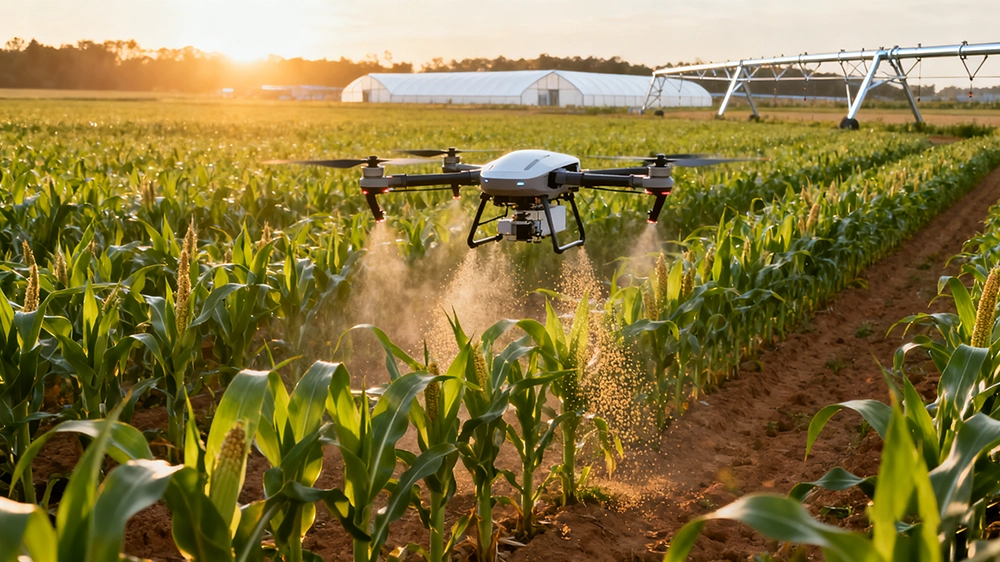
The United States drives Agriculture Drone innovation through collaboration between tech firms and farmers. American drones feature cutting-edge GPS and automation, enabling fully autonomous flights. Farmers use Agriculture Drone to monitor large-scale crops like corn, soybeans, and cotton. Major agritech companies offer cloud-based platforms to store and analyze drone-collected data.
Canada focuses on Agricultural Drone designed for harsh climates and large rural areas. Drones in Canada can operate in cold temperatures and strong winds, covering remote farmlands. They assist in monitoring livestock and detecting wildfires that threaten crops. The Canadian government supports drone training programs to help farmers adopt the technology.
Emerging Markets: Agricultural Drone Growth in Latin America and Africa
Brazil, Latin America’s agricultural leader, is rapidly adopting Agriculture Drone for its vast soybean and coffee plantations. Local startups develop affordable drones tailored to smallholder farmers’ needs. Agriculture Drone helps Brazilian farmers reduce deforestation by optimizing land use. The government’s investment in rural internet access supports real-time drone data analysis.
Kenya leads African Agriculture Drone adoption, using the technology to address food security challenges. Drones in Kenya deliver seeds and fertilizers to remote areas with poor infrastructure. They also monitor drought conditions and help farmers adapt to climate change. International organizations partner with Kenyan firms to expand Agriculture Drone access across the continent.
The Power Behind Global Agricultural Drone Performance: Battewill Batteries
Every high-performing Agricultural Drone relies on a reliable, long-lasting battery—and Battewill delivers exactly that.
As a leading manufacturer of daily-use batteries, Battewill produces specialized power solutions engineered for Agriculture Drone demands. Its lithium-ion and LiFePO4 batteries offer extended runtime, supporting up to 3 hours of continuous flight for large-scale farming tasks. Battewill’s batteries feature fast charging, getting drones back in the air in under an hour to minimize downtime. Built with rugged designs, they withstand extreme temperatures and harsh farming environments, from hot Brazilian fields to cold Canadian prairies.
With built-in safety protections against overcharging and short circuits, Battewill batteries ensure Agriculture Drone operate safely and efficiently. Whether powering a small precision drone or a heavy-duty spraying model, Battewill provides the reliable energy that keeps global agriculture moving forward.